What a compulsion actually is
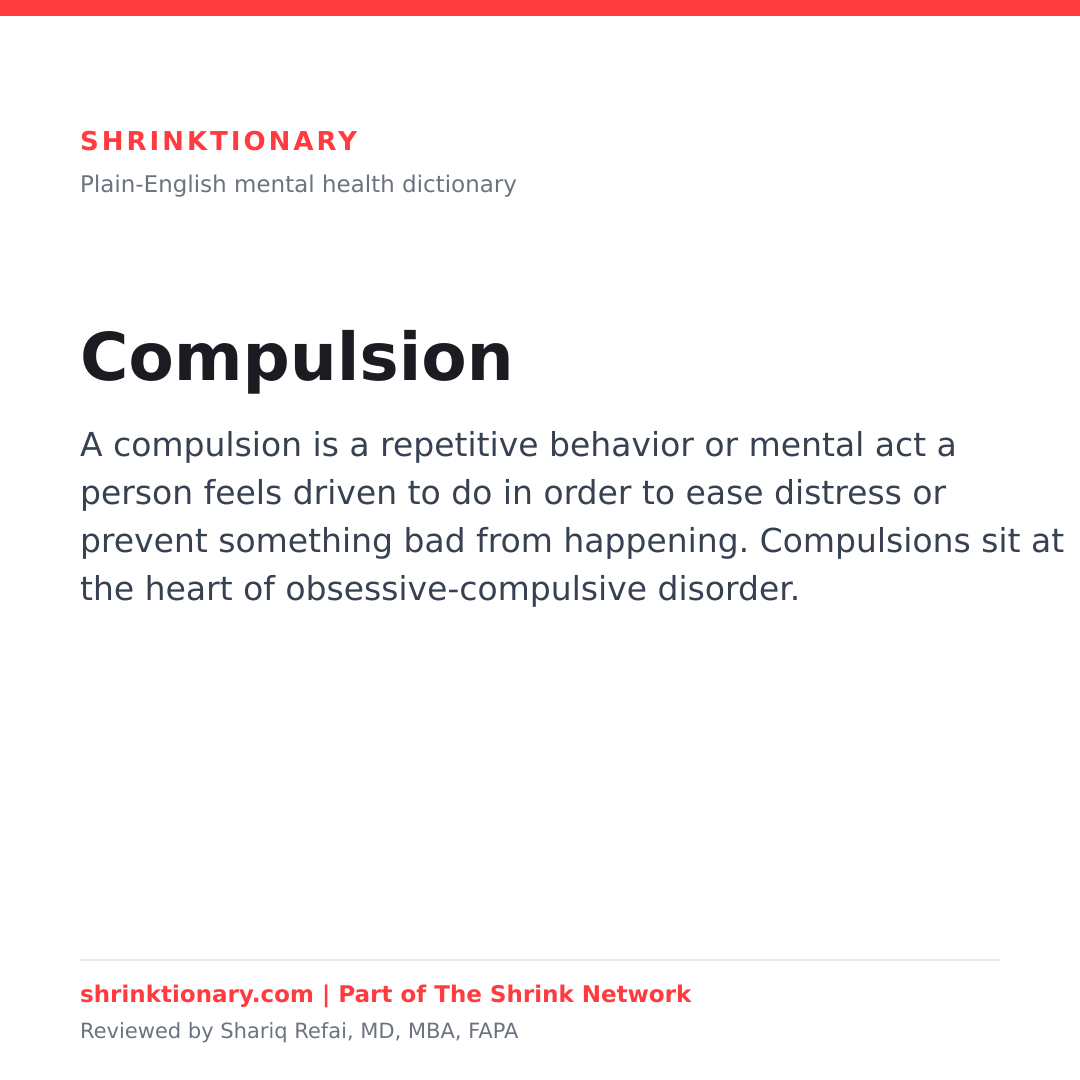
A compulsion is something a person feels they have to do to relieve an uncomfortable feeling, usually anxiety or a sense that something is wrong. It can be a visible action, like washing, checking, or arranging, or a private mental act, like silently counting, praying, or repeating a phrase.
Compulsions are usually a response to an obsession, which is an unwanted, distressing thought, image, or urge. The obsession creates anxiety, and the compulsion is the attempt to make that anxiety go away or to prevent a feared outcome. Wash to undo contamination. Check the lock to prevent a break-in. Repeat the word to keep a loved one safe.
The relief is real but short-lived, which is why the behavior repeats. Like avoidance, it teaches the brain that the danger was real and that the ritual is what kept it at bay.
What a compulsion can look like
Compulsions take many forms. Common ones include repeated hand washing, checking locks or appliances, counting, arranging objects until they feel “just right,” seeking reassurance, or mentally reviewing events. The behavior often has a rigid quality, with a set number of repetitions or a specific order that has to be followed.
People with compulsions usually know the behavior doesn’t make logical sense, but the urge feels enormous and the discomfort of resisting feels unbearable in the moment. The rituals can eat up hours of the day and become exhausting and isolating.
What a compulsion isn’t
A compulsion isn’t the same as a habit or a preference for order. Lots of people like things tidy or double-check a door now and then. A compulsion is driven by anxiety and a feeling of having no choice, not by enjoyment or simple routine.
It also isn’t a sign of a weak or strange character. Compulsions are a well-understood symptom of OCD and related conditions, and they respond well to treatment. The behavior is the disorder talking, not the person’s true wishes.
Related terms you’ll see next
When to seek professional care
Occasional double-checking is part of normal life. It’s worth professional attention when compulsions take up significant time, cause distress, or interfere with work, relationships, or daily routines. A clinician can help sort out what’s going on and offer treatment. Exposure and response prevention, a specific form of therapy, is considered a leading treatment, and medication can help as well. Reaching out is a practical step, not an admission of failure.
When this word matters
It becomes clinically meaningful when repetitive behaviors or mental acts feel driven, eat up time, and are done to ease distress or prevent a feared outcome, which sits at the heart of OCD. It's worth separating from a habit or an addiction, which work differently.
Commonly confused with
Frequently asked questions
What is the difference between a compulsion and a habit?
A compulsion is driven by anxiety and a feeling of having no choice, not by enjoyment or simple routine. Liking things tidy or double-checking a door now and then is different from a ritual you feel you have to do to relieve distress.
Why do compulsions feel so hard to resist?
Doing the compulsion brings real but short-lived relief, which is why the behavior repeats. It teaches the brain that the ritual is what kept a feared outcome away, so the urge feels enormous and resisting feels unbearable in the moment.
How are compulsions treated?
Exposure and response prevention, a specific form of therapy, is considered a leading treatment, and medication can help as well. It's worth professional attention when compulsions take up significant time or interfere with daily life.
Related terms
In these language clusters
Compare
Sources
- Obsessive-Compulsive Disorder (OCD) , National Institute of Mental Health
- Obsessive-Compulsive Disorder , MedlinePlus
Use or cite this definition
Free to reuse with attribution. Paste the block into your own page, or grab a citation.
Embed on your site
<blockquote>
<p><strong>Compulsion:</strong> A compulsion is a repetitive behavior or mental act a person feels driven to do in order to ease distress or prevent something bad from happening. Compulsions sit at the heart of obsessive-compulsive disorder.</p>
<p>— <a href="https://shrinktionary.com/terms/compulsion/">Shrinktionary</a>, a plain-English mental health dictionary, medically reviewed by a board certified psychiatrist.</p>
</blockquote>Cite (APA)
Refai, S. (2026). Compulsion. Shrinktionary. https://shrinktionary.com/terms/compulsion/
Cite (MLA)
"Compulsion." Shrinktionary, https://shrinktionary.com/terms/compulsion/. Accessed September 29, 2026.
Your next step in The Shrink Network
You are here: Shrinktionary, the language layer of The Shrink Network.
Each site in the network has one job. No matter where you enter, we help you find the next step that makes sense.
Want to understand more first?
See how this connects to everything else in the Term Web →
Take it with you
Free printable references you can save or share. For education, not medical advice.