What antidepressant actually is
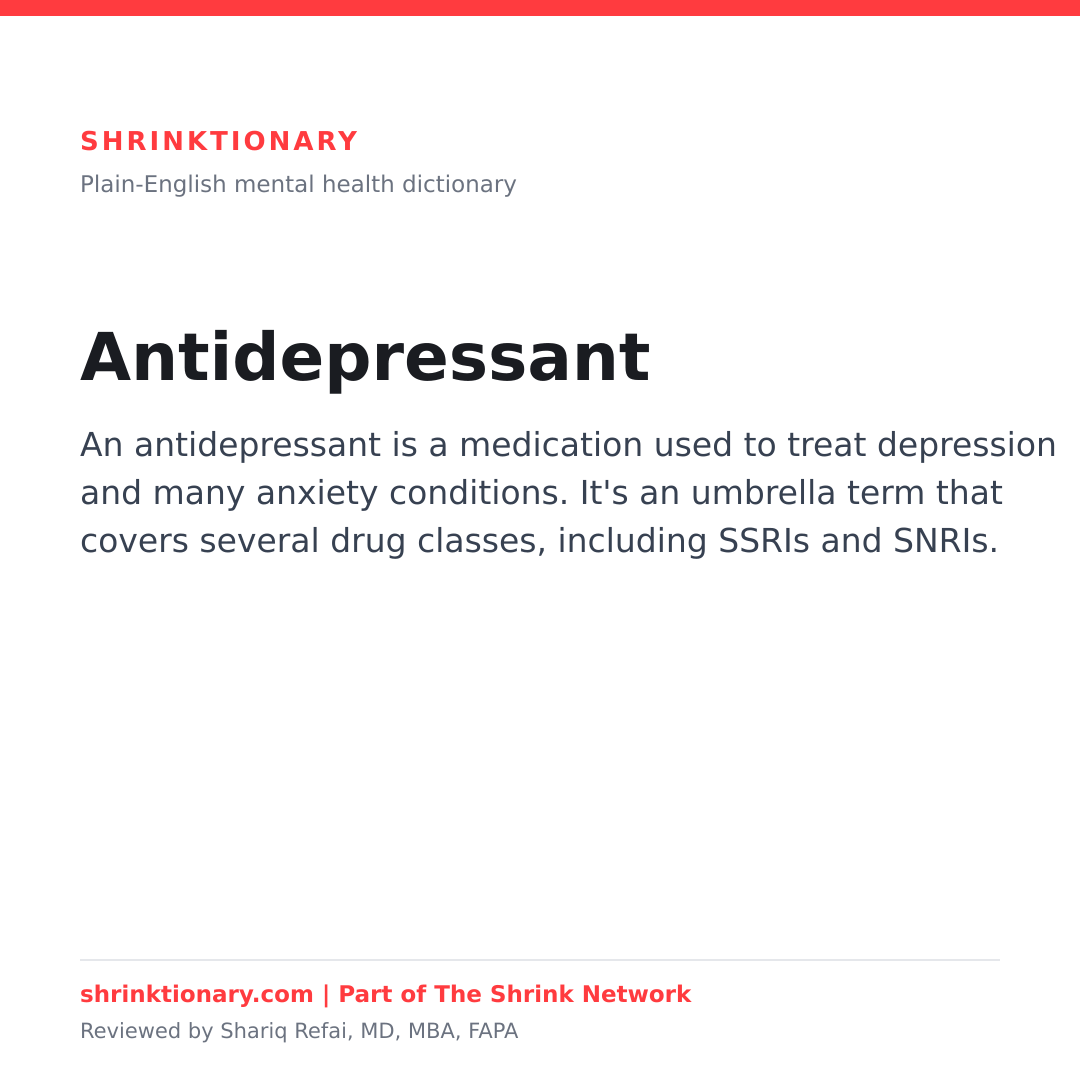
Antidepressant is the broad name for a group of medications that treat depression and several anxiety-related conditions. It isn’t a single drug. It’s a category that includes a few different classes, such as SSRIs, SNRIs, and some older types. These medicines work on chemical messengers in the brain, like serotonin and norepinephrine, that help regulate mood, sleep, appetite, and worry.
Even though the name points to depression, prescribers use antidepressants for a lot more than that. They’re often a first choice for generalized anxiety, panic disorder, OCD, and post-traumatic stress. A doctor picks a specific medication based on a person’s symptoms, other health conditions, and how they’ve responded to treatment before. That decision belongs with a prescriber, not with a label or a search result.
What to expect
Antidepressants don’t work right away. Most people start to notice a difference after two to six weeks, and the full effect can take longer. That slow start trips a lot of people up, so it helps to know it’s normal going in. Early side effects, like nausea or trouble sleeping, often fade after the first couple of weeks even as the benefits build.
Common examples include SSRIs and SNRIs, along with older options like tricyclics and a few medications that don’t fit neatly into either group. Finding the right fit can take some trial and adjustment. People shouldn’t stop an antidepressant on their own or quit it suddenly, since stopping abruptly can cause discontinuation symptoms. Any change to start, switch, or stop should go through the prescriber.
What antidepressant isn’t
An antidepressant isn’t a happy pill or a personality change in a bottle. It doesn’t erase real problems or numb someone into a different person. When it works, it tends to lift the floor so a person can think, sleep, and function more like themselves again.
It also isn’t addictive in the way some people fear, though stopping suddenly can feel rough. And it isn’t a cure that works the same for everyone. Two people with the same diagnosis can respond very differently to the same medication.
Related terms you’ll see next
When to seek professional care
Anyone thinking about starting an antidepressant, or struggling with depression or anxiety that won’t lift, should talk with a doctor or mental health professional. A prescriber can weigh the options and monitor how things go. If a person notices worsening mood, new agitation, or any thoughts of harming themselves, especially in the first weeks of treatment, that’s a reason to reach out right away. In a crisis, call or text 988 in the US to reach the Suicide and Crisis Lifeline.
When this word matters
Antidepressant is an umbrella term, so what matters is knowing which class is meant, since SSRIs, SNRIs, atypicals, tricyclics, and MAOIs differ in how they work and what to watch for. The distinction matters when discussing side effects, interactions, and how a drug should be started or stopped.
Commonly confused with
Frequently asked questions
How long do antidepressants take to work?
Antidepressants don't work right away. Most people start to notice a difference after two to six weeks, and the full effect can take longer. Early side effects like nausea often fade after the first couple of weeks.
Are antidepressants addictive?
Antidepressants aren't addictive in the way some people fear, though stopping suddenly can feel rough and cause discontinuation symptoms. Any change to start, switch, or stop should go through your prescriber.
Do antidepressants change your personality?
An antidepressant isn't a happy pill or a personality change in a bottle. When it works, it tends to lift the floor so a person can think, sleep, and function more like themselves again.
Related terms
In these language clusters
Compare
Sources
- Mental Health Medications , National Institute of Mental Health
- Antidepressants , MedlinePlus
Use or cite this definition
Free to reuse with attribution. Paste the block into your own page, or grab a citation.
Embed on your site
<blockquote>
<p><strong>Antidepressant:</strong> An antidepressant is a medication used to treat depression and many anxiety conditions. It's an umbrella term that covers several drug classes, including SSRIs and SNRIs.</p>
<p>— <a href="https://shrinktionary.com/terms/antidepressant/">Shrinktionary</a>, a plain-English mental health dictionary, medically reviewed by a board certified psychiatrist.</p>
</blockquote>Cite (APA)
Refai, S. (2026). Antidepressant. Shrinktionary. https://shrinktionary.com/terms/antidepressant/
Cite (MLA)
"Antidepressant." Shrinktionary, https://shrinktionary.com/terms/antidepressant/. Accessed September 29, 2026.
Your next step in The Shrink Network
You are here: Shrinktionary, the language layer of The Shrink Network.
Each site in the network has one job. No matter where you enter, we help you find the next step that makes sense.
Want to understand more first?
See how this connects to everything else in the Term Web →
Take it with you
Free printable references you can save or share. For education, not medical advice.