What an SNRI actually is
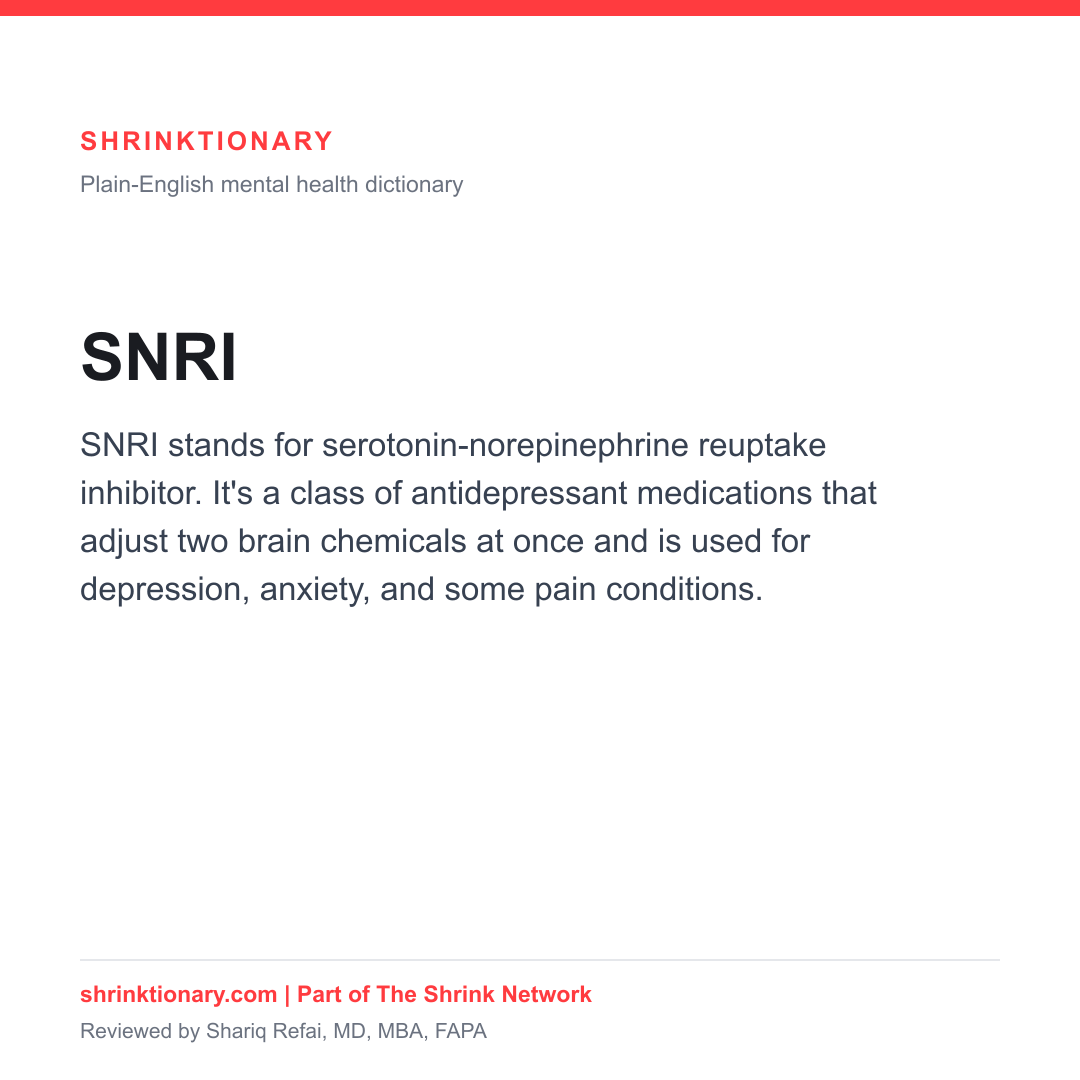
SNRI stands for serotonin-norepinephrine reuptake inhibitor. It is a class of antidepressant medication that affects two of the brain’s chemical messengers, serotonin and norepinephrine. By slowing the reabsorption, or reuptake, of both, SNRIs leave more of these signals available between nerve cells, which over time can help regulate mood and anxiety.
SNRIs are closely related to SSRIs, which act mainly on serotonin alone. The key difference is that SNRIs also work on norepinephrine, a chemical involved in alertness, energy, and the body’s stress response.
Doctors prescribe SNRIs for major depression and several anxiety disorders. Some are also used for certain chronic pain and nerve pain conditions, which sets them apart from many other antidepressants.
See it in action: see an SNRI at the synapse.
What an SNRI looks like in practice
Like other antidepressants, SNRIs usually take a few weeks before their full effect on mood becomes clear, even though some changes may show up sooner. They are taken regularly rather than only when symptoms flare.
Common side effects can include nausea, dry mouth, sleep changes, sweating, and in some cases changes in blood pressure, since norepinephrine plays a role in the cardiovascular system. Side effects often ease over the first weeks, and prescribers monitor for them.
Stopping an SNRI suddenly can cause uncomfortable discontinuation symptoms, so changes are usually made gradually under medical guidance. All decisions about starting, adjusting, or stopping an SNRI belong with a prescriber.
What an SNRI isn’t
An SNRI is not a stronger or better version of an SSRI by default. The two classes simply work somewhat differently, and the right choice depends on the person, their symptoms, and how they respond.
It is also not a stimulant or a quick-acting calming pill. SNRIs work gradually over weeks, not within minutes or hours.
And it is not addictive in the way some controlled substances are. Still, it should be tapered rather than stopped abruptly to avoid discontinuation effects.
Related terms you’ll see next
SSRI, Serotonin, Dopamine, and Generalized anxiety disorder often come up alongside SNRIs.
When to seek professional care
Whether an SNRI is a good fit is a medical decision that belongs with a prescriber who knows a person’s full history. Anyone considering, taking, or thinking about stopping one of these medications should talk with their doctor or psychiatrist rather than making changes on their own. New or worsening mood, anxiety, or thoughts of self-harm after a medication change should be reported to a prescriber promptly.
When this word matters
The SSRI versus SNRI distinction matters when a prescriber is choosing or switching medication, since SNRIs act on norepinephrine too and may be tried for depression or anxiety that hasn't responded to an SSRI, or when nerve pain is also part of the picture. Pay attention to how a new medicine affects your energy, blood pressure, and mood over the first weeks.
Commonly confused with
Frequently asked questions
What is the difference between an SNRI and an SSRI?
SSRIs act mainly on serotonin alone, while SNRIs also work on norepinephrine, a chemical involved in alertness, energy, and the stress response. The right choice depends on the person, their symptoms, and how they respond.
How long does an SNRI take to work?
Like other antidepressants, SNRIs usually take a few weeks before their full effect on mood becomes clear, even though some changes may show up sooner. They're taken regularly rather than only when symptoms flare.
Are SNRIs addictive?
SNRIs aren't addictive in the way some controlled substances are. Still, stopping suddenly can cause uncomfortable discontinuation symptoms, so they should be tapered gradually under medical guidance rather than stopped abruptly.
Related terms
In these language clusters
Sources
- Mental Health Medications , National Institute of Mental Health
- Antidepressants , MedlinePlus
Use or cite this definition
Free to reuse with attribution. Paste the block into your own page, or grab a citation.
Embed on your site
<blockquote>
<p><strong>SNRI:</strong> SNRI stands for serotonin-norepinephrine reuptake inhibitor. It's a class of antidepressant medications that adjust two brain chemicals at once and is used for depression, anxiety, and some pain conditions.</p>
<p>— <a href="https://shrinktionary.com/terms/snri/">Shrinktionary</a>, a plain-English mental health dictionary, medically reviewed by a board certified psychiatrist.</p>
</blockquote>Cite (APA)
Refai, S. (2026). SNRI. Shrinktionary. https://shrinktionary.com/terms/snri/
Cite (MLA)
"SNRI." Shrinktionary, https://shrinktionary.com/terms/snri/. Accessed September 29, 2026.
Your next step in The Shrink Network
You are here: Shrinktionary, the language layer of The Shrink Network.
Each site in the network has one job. No matter where you enter, we help you find the next step that makes sense.
Want to understand more first?
See how this connects to everything else in the Term Web →
Take it with you
Free printable references you can save or share. For education, not medical advice.