What discontinuation syndrome actually is
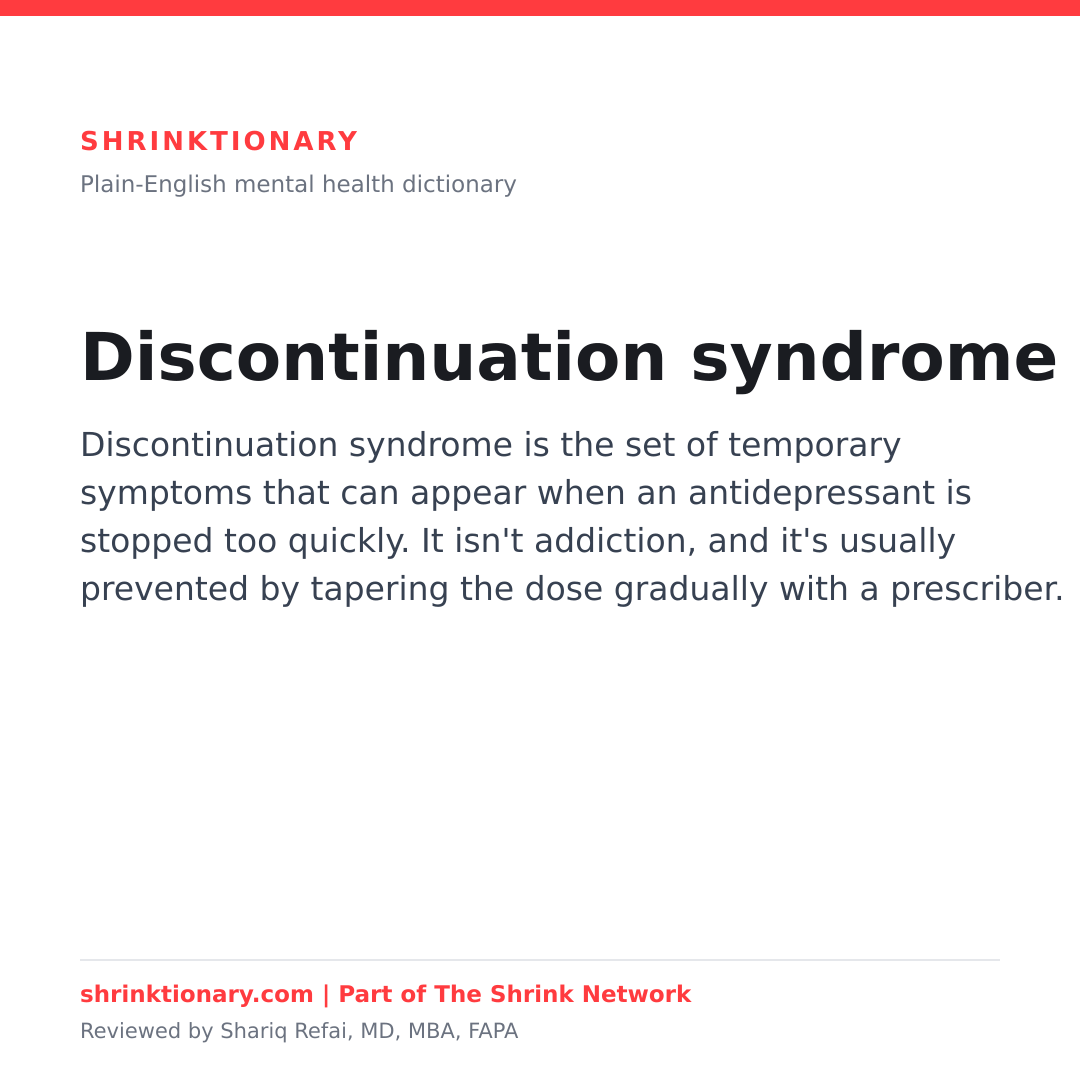
Discontinuation syndrome is what can happen when an antidepressant, often an SSRI or SNRI, is stopped suddenly or tapered too fast. The brain has adjusted to the medication being present, and when it disappears quickly, the system needs time to recalibrate. During that window, a cluster of temporary symptoms can show up. It’s a physiological adjustment, not a sign that anything has gone wrong with the person or that the medication was harmful.
It’s more likely with medications that leave the body quickly, and less likely with ones that clear slowly, which is why a drug’s half-life matters here. The symptoms are uncomfortable but not dangerous for most people, and they fade as the body adjusts or when the dose is restored and then tapered more slowly. How common and how strong they are varies a lot from person to person and from drug to drug, and someone can have an easy time stopping one antidepressant and a harder time with another.
What discontinuation syndrome can feel like
People describe flu-like feelings, dizziness, nausea, headache, trouble sleeping, vivid dreams, irritability, and odd sensations sometimes called “brain zaps,” brief electric-shock feelings in the head. Symptoms usually start within a few days of stopping and ease over one to two weeks, though a slower course happens for some people. The mix and intensity differ widely, and not everyone who stops an antidepressant gets them at all.
Because some symptoms overlap with anxiety or low mood, discontinuation can be mistaken for the original condition returning. The timing and the physical symptoms usually help tell them apart. Discontinuation tends to come on fast, within days, and settle within a couple of weeks, while a true return of depression tends to build more gradually and stick around. If restarting the medication clears the symptoms within a day or two, that also points toward discontinuation rather than relapse.
What discontinuation syndrome isn’t
This isn’t addiction. Antidepressants don’t cause craving or compulsive use the way addictive substances do. Discontinuation symptoms reflect the body adjusting to a change, not a drug dependency in the addictive sense. It also isn’t a reason to never stop a medication. It’s a reason to stop it the right way, gradually and with a prescriber. And it isn’t the same as a relapse of the underlying condition, even though the two can feel similar at first, which is why the timing and pattern of symptoms matter so much.
Related terms you’ll see next
SSRIs and SNRIs are the medication classes most associated with discontinuation symptoms. Depression is the condition they most often treat, and knowing the difference between discontinuation and relapse matters for what happens next. Anxiety symptoms can overlap with discontinuation, which is another reason to loop in your prescriber rather than guessing on your own.
When to seek professional care
Never stop or change an antidepressant on your own. If you and your prescriber decide to stop, they can set a taper that lowers the dose gradually, sometimes over weeks, to give the brain time to adjust. If you’ve stopped abruptly and feel unwell, contact your prescriber, who can guide a safer taper or, if needed, briefly restart the medication and step it down more slowly. Symptoms that are severe, that don’t settle, or that include thoughts of self-harm are reasons to reach out promptly rather than waiting them out.
When this word matters
It matters most when an antidepressant is stopped suddenly or tapered too fast, especially with medications that leave the body quickly, and the timing helps tell it apart from the original condition returning. Telling discontinuation from relapse is the key distinction, and a prescriber can guide a slower taper.
Commonly confused with
Frequently asked questions
Is antidepressant discontinuation syndrome the same as addiction?
No. Antidepressants don't cause craving or compulsive use the way addictive substances do. Discontinuation symptoms reflect the body adjusting to a change, not a drug dependency in the addictive sense.
How long does discontinuation syndrome last?
Symptoms usually start within a few days of stopping and ease over about one to two weeks. They include flu-like feelings, dizziness, nausea, headache, trouble sleeping, irritability, and brief electric-shock sensations sometimes called brain zaps.
How do you avoid discontinuation syndrome?
It's usually prevented by tapering the dose gradually with a prescriber rather than stopping suddenly. Never stop or change an antidepressant on your own, and if you've stopped abruptly and feel unwell, contact your prescriber.
Related terms
In these language clusters
Sources
- Mental Health Medications , National Institute of Mental Health
- Antidepressants , MedlinePlus, U.S. National Library of Medicine
Use or cite this definition
Free to reuse with attribution. Paste the block into your own page, or grab a citation.
Embed on your site
<blockquote>
<p><strong>Discontinuation syndrome:</strong> Discontinuation syndrome is the set of temporary symptoms that can appear when an antidepressant is stopped too quickly. It isn't addiction, and it's usually prevented by tapering the dose gradually with a prescriber.</p>
<p>— <a href="https://shrinktionary.com/terms/discontinuation-syndrome/">Shrinktionary</a>, a plain-English mental health dictionary, medically reviewed by a board certified psychiatrist.</p>
</blockquote>Cite (APA)
Refai, S. (2026). Discontinuation syndrome. Shrinktionary. https://shrinktionary.com/terms/discontinuation-syndrome/
Cite (MLA)
"Discontinuation syndrome." Shrinktionary, https://shrinktionary.com/terms/discontinuation-syndrome/. Accessed September 29, 2026.
Your next step in The Shrink Network
You are here: Shrinktionary, the language layer of The Shrink Network.
Each site in the network has one job. No matter where you enter, we help you find the next step that makes sense.
Want to understand more first?
See how this connects to everything else in the Term Web →
Take it with you
Free printable references you can save or share. For education, not medical advice.