What attachment actually is
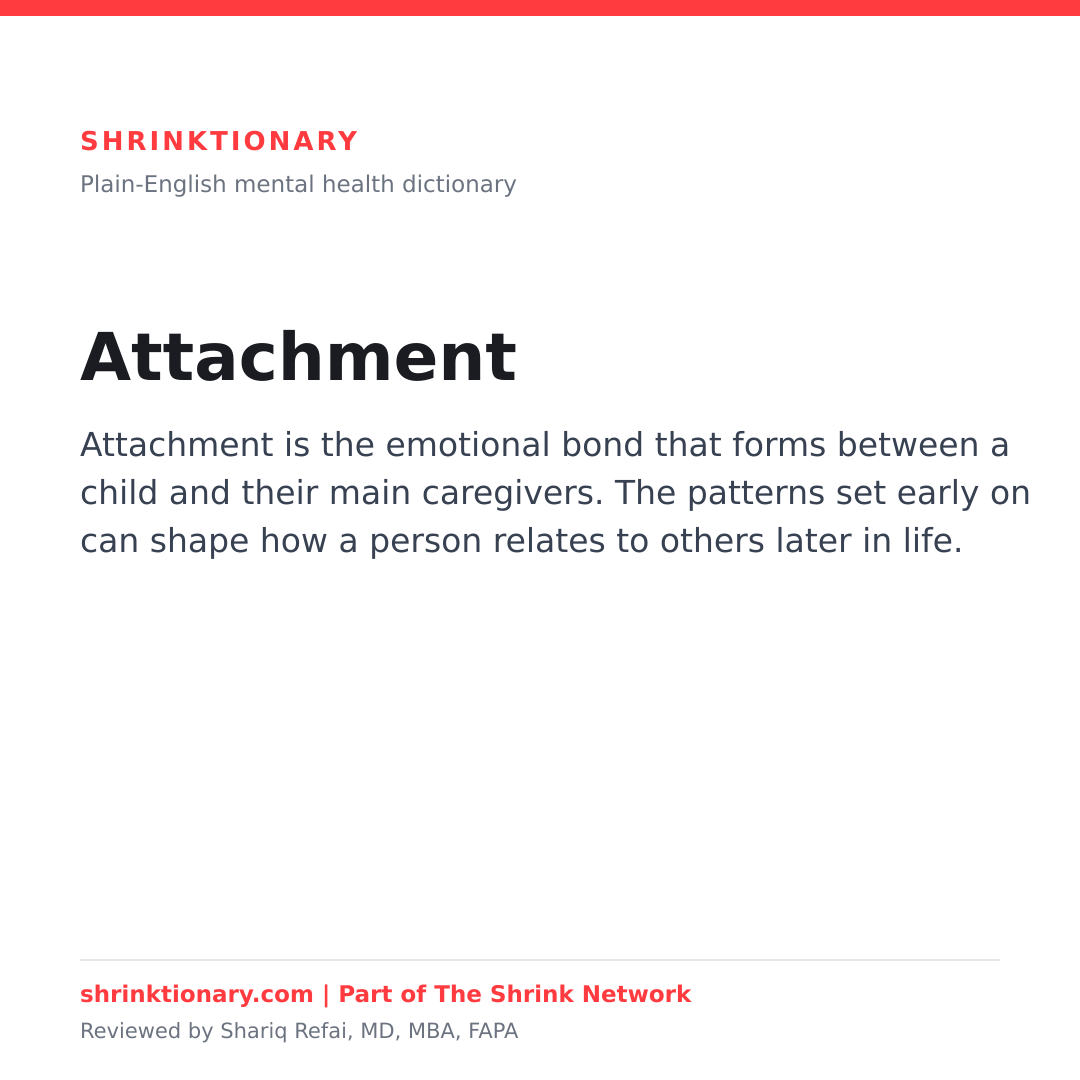
Attachment is the deep emotional connection between a baby or young child and the people who care for them. It is the system that drives a child to seek comfort, safety, and closeness, especially when they are scared, tired, or upset. A caregiver who responds in a warm and reliable way helps the child feel secure.
Researchers have described different attachment patterns or styles. A secure pattern tends to form when care is consistent and responsive. Less secure patterns can show up when care is unpredictable, distant, or frightening. These are general tendencies, not fixed labels, and they describe a relationship rather than a flaw in the child.
How attachment works
Early on, a child learns what to expect from the people around them. If reaching out for comfort usually brings warmth, the child learns that closeness is safe and that their needs matter. If reaching out is often met with rejection or chaos, the child may learn to expect less and adjust how they seek connection.
These early lessons can become a kind of inner template for relationships. They influence how a person handles closeness, trust, and conflict as a teenager and an adult. This does not mean early experiences lock in a fixed future. Relationships and experiences across life, including therapy, can shift these patterns. The brain stays capable of change.
What attachment isn’t
Attachment is not the same as love alone, and it is not a measure of how much a parent cares. A devoted parent who is overwhelmed or unwell can still struggle to respond consistently. Attachment describes the pattern of interaction, not anyone’s worth.
It is also not a permanent sentence. A less secure start does not doom someone to bad relationships. And attachment styles are not rigid personality types or formal diagnoses. They are useful ways to think about how people connect.
Related terms you’ll see next
Why it matters for mental health
Attachment shapes how people handle stress, intimacy, and trust, which touches almost every part of emotional life. Understanding your own patterns can make relationship struggles feel less confusing and more workable. Because these patterns can change, therapy and steady, caring relationships can help someone build a greater sense of security over time, no matter how they started out.
When this word matters
Attachment matters as a lens for understanding how early bonds with caregivers can shape later relationships, not as a diagnosis on its own. Attachment style is a pattern, distinct from a clinical condition, and the labels people use casually online often blur that line.
Commonly confused with
Frequently asked questions
Can your attachment style change?
Yes. Attachment patterns aren't a permanent sentence. Relationships and experiences across life, including therapy, can shift these patterns, because the brain stays capable of change.
Is attachment style a diagnosis?
No. Attachment styles aren't rigid personality types or formal diagnoses. They're useful ways to think about how people handle closeness, trust, and conflict.
Does a less secure attachment mean a parent didn't love their child?
No. Attachment describes the pattern of interaction, not how much a parent cares. A devoted parent who is overwhelmed or unwell can still struggle to respond consistently.
Related terms
Sources
- Health Topics A to Z , Eunice Kennedy Shriver National Institute of Child Health and Human Development
- Parenting , American Psychological Association
Use or cite this definition
Free to reuse with attribution. Paste the block into your own page, or grab a citation.
Embed on your site
<blockquote>
<p><strong>Attachment:</strong> Attachment is the emotional bond that forms between a child and their main caregivers. The patterns set early on can shape how a person relates to others later in life.</p>
<p>— <a href="https://shrinktionary.com/terms/attachment/">Shrinktionary</a>, a plain-English mental health dictionary, medically reviewed by a board certified psychiatrist.</p>
</blockquote>Cite (APA)
Refai, S. (2026). Attachment. Shrinktionary. https://shrinktionary.com/terms/attachment/
Cite (MLA)
"Attachment." Shrinktionary, https://shrinktionary.com/terms/attachment/. Accessed September 29, 2026.
See also on ShrinkDaily
For a three-minute daily lesson on this idea, read the daily concept on attachment.
Your next step in The Shrink Network
You are here: Shrinktionary, the language layer of The Shrink Network.
Each site in the network has one job. No matter where you enter, we help you find the next step that makes sense.
Want to understand more first?
See how this connects to everything else in the Term Web →
Take it with you
Free printable references you can save or share. For education, not medical advice.