What a benzodiazepine actually is
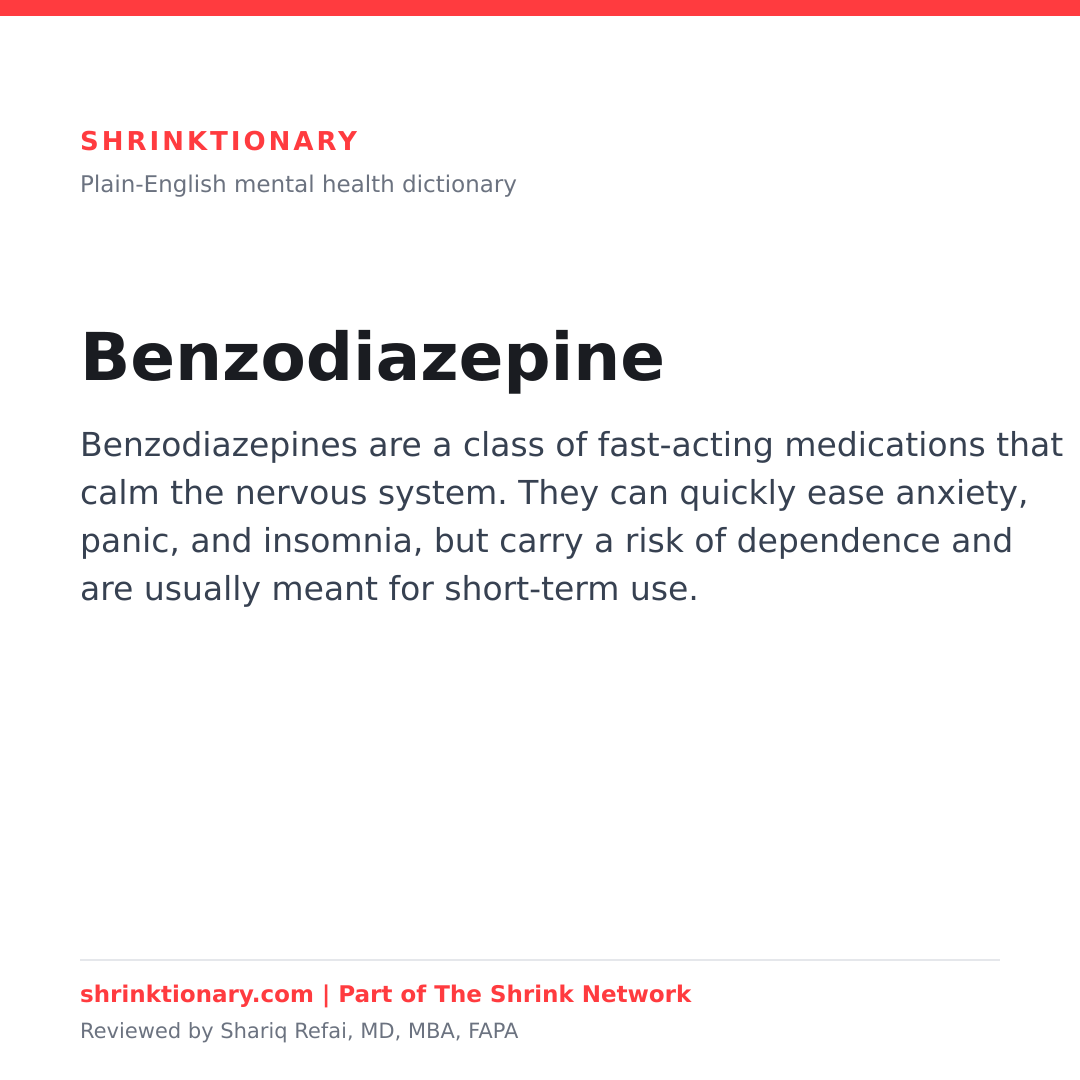
Benzodiazepines are a class of medication that slow down activity in the central nervous system. They do this by boosting the effect of a calming brain chemical called GABA, which dampens overactive nerve signaling. The result is a quick reduction in anxiety, agitation, muscle tension, and sometimes a sedating, sleep-inducing effect.
What sets benzodiazepines apart from antidepressants is speed. While medications like SSRIs take weeks to work, benzodiazepines can act within minutes to an hour. That makes them useful for acute, intense situations such as a severe panic attack.
Doctors may prescribe them for anxiety, panic, certain types of insomnia, seizures, and other conditions. Because of their fast action and calming effect, they are usually intended for short-term or occasional use rather than as a long-term daily treatment.
See it in action: watch what a benzodiazepine does in the brain.
What a benzodiazepine looks like in practice
In practice, a benzodiazepine might be used briefly during a crisis, before a feared procedure, or for a short period while a slower-acting medication takes effect. Common effects include drowsiness, slowed reactions, and reduced alertness, which is why driving and combining them with alcohol can be dangerous.
With regular use over time, the body can develop tolerance, meaning the same dose has less effect, and dependence, meaning the body adapts and reacts when the medication stops. Stopping suddenly after extended use can cause serious withdrawal, so any change is made gradually under medical supervision.
All decisions about whether to use a benzodiazepine, and for how long, belong with a prescriber who can weigh the benefits against these risks.
What a benzodiazepine isn’t
A benzodiazepine is not a cure for an anxiety disorder. It can calm symptoms in the moment, but it does not treat the underlying condition the way therapy or longer-term medications can.
It is also not meant for daily, indefinite use in most cases. The risk of tolerance, dependence, and withdrawal is exactly why these medications are usually reserved for short-term or as-needed use.
And it is not safe to mix freely with other sedating substances. Combining benzodiazepines with alcohol or opioids can dangerously slow breathing, which is a serious safety concern.
Related terms you’ll see next
Fight-or-flight, Panic disorder, Insomnia, and SSRI often come up alongside benzodiazepines.
When to seek professional care
Because benzodiazepines carry real risks of dependence and withdrawal, decisions about using them belong with a prescriber who can monitor closely. Anyone taking one should never adjust the dose or stop suddenly on their own. If anxiety, panic, or sleep problems are interfering with daily life, a doctor or psychiatrist can help find a treatment plan that is both effective and safe.
When this word matters
These matter because they work fast to ease anxiety, panic, and insomnia but carry a real risk of dependence, so they're usually meant for short-term use. The distinction from daily antidepressants matters, since benzodiazepines act quickly and aren't typically a long-term solution.
Commonly confused with
Frequently asked questions
Are benzodiazepines addictive?
They carry a real risk of dependence. With regular use over time, the body can develop tolerance and dependence, and stopping suddenly after extended use can cause serious withdrawal, so any change is made gradually under medical supervision.
How fast do benzodiazepines work?
Speed is what sets them apart from antidepressants. While medications like SSRIs take weeks to work, benzodiazepines can act within minutes to an hour, which makes them useful for acute situations like a severe panic attack.
Is it safe to mix benzodiazepines with alcohol?
No. Combining benzodiazepines with alcohol or opioids can dangerously slow breathing, which is a serious safety concern.
Related terms
In these language clusters
Sources
- Mental Health Medications , National Institute of Mental Health
Use or cite this definition
Free to reuse with attribution. Paste the block into your own page, or grab a citation.
Embed on your site
<blockquote>
<p><strong>Benzodiazepine:</strong> Benzodiazepines are a class of fast-acting medications that calm the nervous system. They can quickly ease anxiety, panic, and insomnia, but carry a risk of dependence and are usually meant for short-term use.</p>
<p>— <a href="https://shrinktionary.com/terms/benzodiazepine/">Shrinktionary</a>, a plain-English mental health dictionary, medically reviewed by a board certified psychiatrist.</p>
</blockquote>Cite (APA)
Refai, S. (2026). Benzodiazepine. Shrinktionary. https://shrinktionary.com/terms/benzodiazepine/
Cite (MLA)
"Benzodiazepine." Shrinktionary, https://shrinktionary.com/terms/benzodiazepine/. Accessed September 29, 2026.
Your next step in The Shrink Network
You are here: Shrinktionary, the language layer of The Shrink Network.
Each site in the network has one job. No matter where you enter, we help you find the next step that makes sense.
Want to understand more first?
See how this connects to everything else in the Term Web →
Take it with you
Free printable references you can save or share. For education, not medical advice.