What a flashback actually is
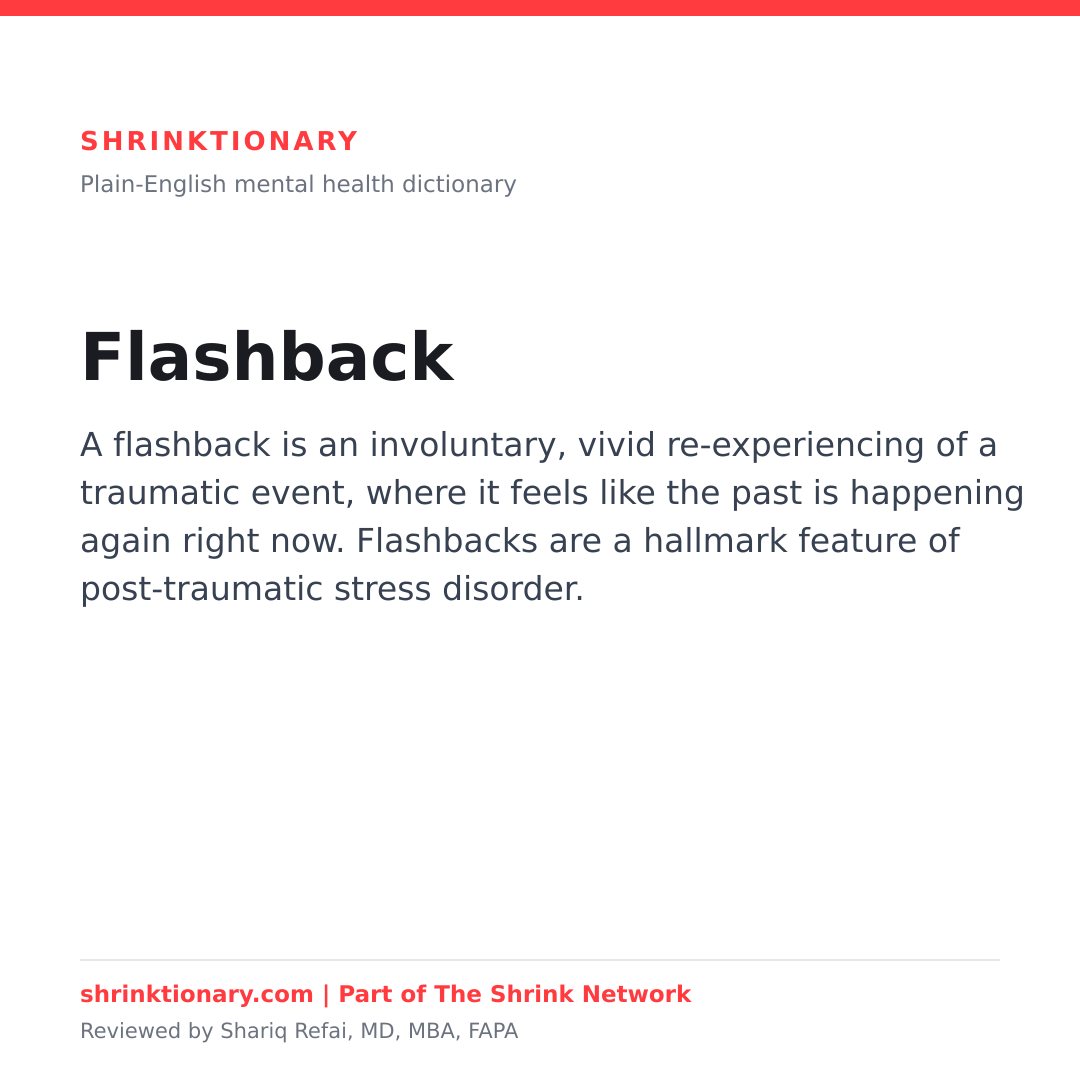
A flashback is the brain re-running a traumatic memory so vividly that it feels like the event is happening again in the present. It’s more than remembering. During a flashback, the sights, sounds, smells, and body sensations of the original moment can come flooding back as if they were real and current.
This happens because trauma can change how a memory gets stored. Instead of filing the event away as something that happened in the past, the brain keeps it in a kind of raw, unprocessed form. A reminder, sometimes called a trigger, can pull that memory back into the present without warning.
Flashbacks are one of the core re-experiencing symptoms of PTSD. They can be brief flickers or longer episodes where a person loses track of where they are.
What a flashback can feel like
People describe flashbacks as being yanked back in time. They might see images of the event, hear sounds from it, or feel physical sensations in their body that match what happened. The emotions, fear, helplessness, or panic, can hit with full force.
During an intense flashback, a person may briefly lose awareness of their actual surroundings. Afterward they often feel shaken, drained, or disoriented. Flashbacks can be set off by obvious reminders or by subtle cues a person doesn’t even consciously notice, which makes them feel unpredictable and frightening.
What a flashback isn’t
A flashback isn’t the same as an ordinary memory or a daydream. A normal memory feels like it belongs to the past. A flashback collapses that distance and feels like the present.
It also isn’t a sign that a person is losing their mind or making things up. Flashbacks are a recognized, well-documented symptom of trauma, and they reflect how the nervous system stored an overwhelming experience. They tend to ease with effective treatment.
Related terms you’ll see next
When to seek professional care
It’s worth reaching out to a professional when flashbacks happen repeatedly, feel distressing, or interfere with daily life, sleep, or relationships, especially after a traumatic experience. Effective treatments exist, including trauma-focused therapies like EMDR and certain forms of exposure-based therapy. A clinician can help a person process the memory so it finally settles into the past. If flashbacks come with thoughts of self-harm or suicide, reach out right away. In the United States, you can call or text 988 to reach the Suicide and Crisis Lifeline.
When this word matters
Flashbacks matter as one of the core re-experiencing symptoms of PTSD, where a trauma memory feels like it's happening again in the present rather than belonging to the past. They aren't ordinary memories or a sign of losing your mind, and they tend to ease with effective treatment.
Commonly confused with
Frequently asked questions
What's the difference between a flashback and a normal memory?
A normal memory feels like it belongs to the past. A flashback collapses that distance, so the sights, sounds, and body sensations of the event feel like they're happening again in the present.
What causes flashbacks?
Trauma can change how a memory gets stored, leaving it in a raw, unprocessed form. A reminder, sometimes called a trigger, can pull that memory back into the present without warning. Flashbacks are a core re-experiencing symptom of PTSD.
Can flashbacks be treated?
Yes. Flashbacks tend to ease with effective treatment, including trauma-focused therapies like EMDR and certain forms of exposure-based therapy. A clinician can help process the memory so it settles into the past.
Related terms
In these language clusters
Compare
Sources
- Post-Traumatic Stress Disorder (PTSD) , National Institute of Mental Health
- Post-Traumatic Stress Disorder , MedlinePlus
Use or cite this definition
Free to reuse with attribution. Paste the block into your own page, or grab a citation.
Embed on your site
<blockquote>
<p><strong>Flashback:</strong> A flashback is an involuntary, vivid re-experiencing of a traumatic event, where it feels like the past is happening again right now. Flashbacks are a hallmark feature of post-traumatic stress disorder.</p>
<p>— <a href="https://shrinktionary.com/terms/flashback/">Shrinktionary</a>, a plain-English mental health dictionary, medically reviewed by a board certified psychiatrist.</p>
</blockquote>Cite (APA)
Refai, S. (2026). Flashback. Shrinktionary. https://shrinktionary.com/terms/flashback/
Cite (MLA)
"Flashback." Shrinktionary, https://shrinktionary.com/terms/flashback/. Accessed September 29, 2026.
Your next step in The Shrink Network
You are here: Shrinktionary, the language layer of The Shrink Network.
Each site in the network has one job. No matter where you enter, we help you find the next step that makes sense.
Want to understand more first?
See how this connects to everything else in the Term Web →
Take it with you
Free printable references you can save or share. For education, not medical advice.