What being triggered actually is
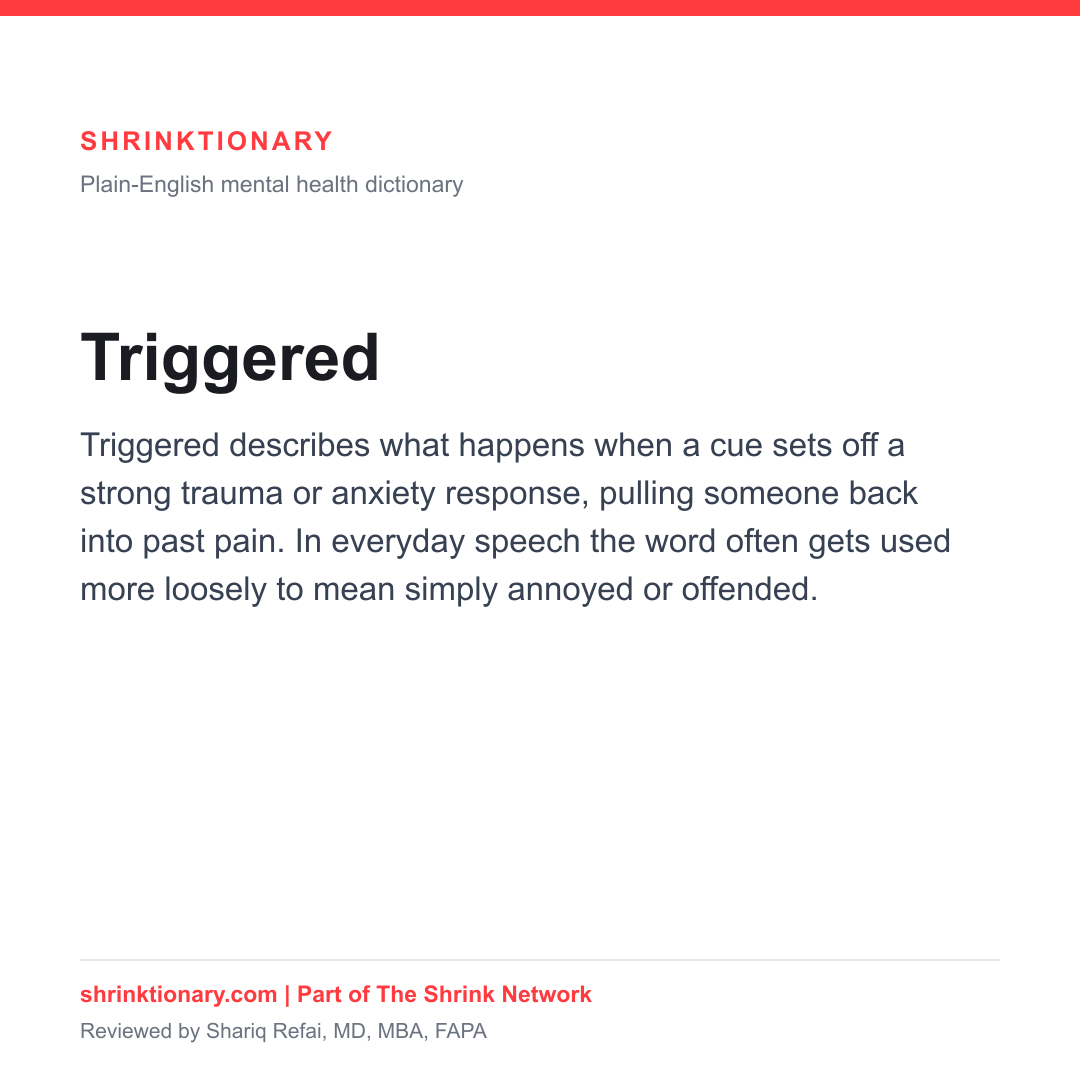
In its clinical sense, being triggered means encountering a cue that sets off a strong, often automatic emotional and physical reaction tied to past trauma or anxiety. A trigger can be a sound, a smell, a place, a phrase, a date on the calendar, or a body sensation that the brain links to an earlier overwhelming experience.
When a trigger hits, the nervous system can react as if the danger is happening right now. That might mean a flashback, a surge of panic, a wave of dread, or a sense of going numb or far away. The reaction can be far bigger than the situation seems to call for, because the brain is responding to the old event, not just the present one.
This is a well-recognized part of how trauma and anxiety work, and it’s why managing triggers is a focus of trauma-informed treatment.
What being triggered can look like
In its clinical form, someone who is triggered might suddenly feel their heart race, their thoughts scatter, or their body tense for a fight or an escape. They may feel pulled back into a past moment, become tearful or angry, or shut down and go quiet. The reaction often feels sudden and outside their control.
The word also has a much looser everyday life. Online and in casual conversation, “triggered” often just means annoyed, offended, or worked up about something. That casual use is so common that it can blur the clinical meaning and, at times, make light of what is a genuine and distressing experience for people living with trauma.
What being triggered isn’t
Being triggered in the clinical sense isn’t the same as simply being upset, offended, or disagreeing with something. A genuine trauma trigger sets off a deep, often physical stress response rooted in past experience, not just a difference of opinion.
It also isn’t a choice or an overreaction a person could just switch off. The response is largely automatic. Using “triggered” as a punchline can unintentionally dismiss how real and involuntary that response is for someone with PTSD or an anxiety condition.
Related terms you’ll see next
When to seek professional care
Most people get reminded of unpleasant moments without being thrown into distress. It’s worth talking to a professional when triggers set off intense reactions that interfere with daily life, relationships, or sleep, or when they follow a traumatic experience. Trauma-focused therapies can help a person understand their triggers and respond to them differently over time. If being triggered brings up thoughts of self-harm or suicide, reach out right away. In the United States, you can call or text 988.
When this word matters
In its clinical sense, being triggered matters when a cue sets off a strong trauma or anxiety response that pulls someone back into past pain, which is central in PTSD and related conditions. Everyday use often means simply annoyed or offended, so it helps to notice which sense is meant.
Commonly confused with
Frequently asked questions
What does it mean to be triggered?
In its clinical sense, being triggered means encountering a cue that sets off a strong, often automatic emotional and physical reaction tied to past trauma or anxiety. The trigger can be a sound, smell, place, phrase, date, or body sensation the brain links to an earlier overwhelming experience.
Is being triggered the same as being offended?
Not in the clinical sense. A genuine trauma trigger sets off a deep, often physical stress response rooted in past experience, not just a difference of opinion or being upset. The casual online use of the word can blur and make light of that real experience.
Can you control being triggered?
The response is largely automatic, so it isn't a choice a person can simply switch off. Trauma-focused therapies can help someone understand their triggers and respond to them differently over time.
Related terms
Sources
- Post-Traumatic Stress Disorder (PTSD) , National Institute of Mental Health
- Post-Traumatic Stress Disorder , MedlinePlus
Use or cite this definition
Free to reuse with attribution. Paste the block into your own page, or grab a citation.
Embed on your site
<blockquote>
<p><strong>Triggered:</strong> Triggered describes what happens when a cue sets off a strong trauma or anxiety response, pulling someone back into past pain. In everyday speech the word often gets used more loosely to mean simply annoyed or offended.</p>
<p>— <a href="https://shrinktionary.com/terms/triggered/">Shrinktionary</a>, a plain-English mental health dictionary, medically reviewed by a board certified psychiatrist.</p>
</blockquote>Cite (APA)
Refai, S. (2026). Triggered. Shrinktionary. https://shrinktionary.com/terms/triggered/
Cite (MLA)
"Triggered." Shrinktionary, https://shrinktionary.com/terms/triggered/. Accessed September 29, 2026.
Your next step in The Shrink Network
You are here: Shrinktionary, the language layer of The Shrink Network.
Each site in the network has one job. No matter where you enter, we help you find the next step that makes sense.
Want to understand more first?
See how this connects to everything else in the Term Web →
Take it with you
Free printable references you can save or share. For education, not medical advice.