What comorbidity actually is
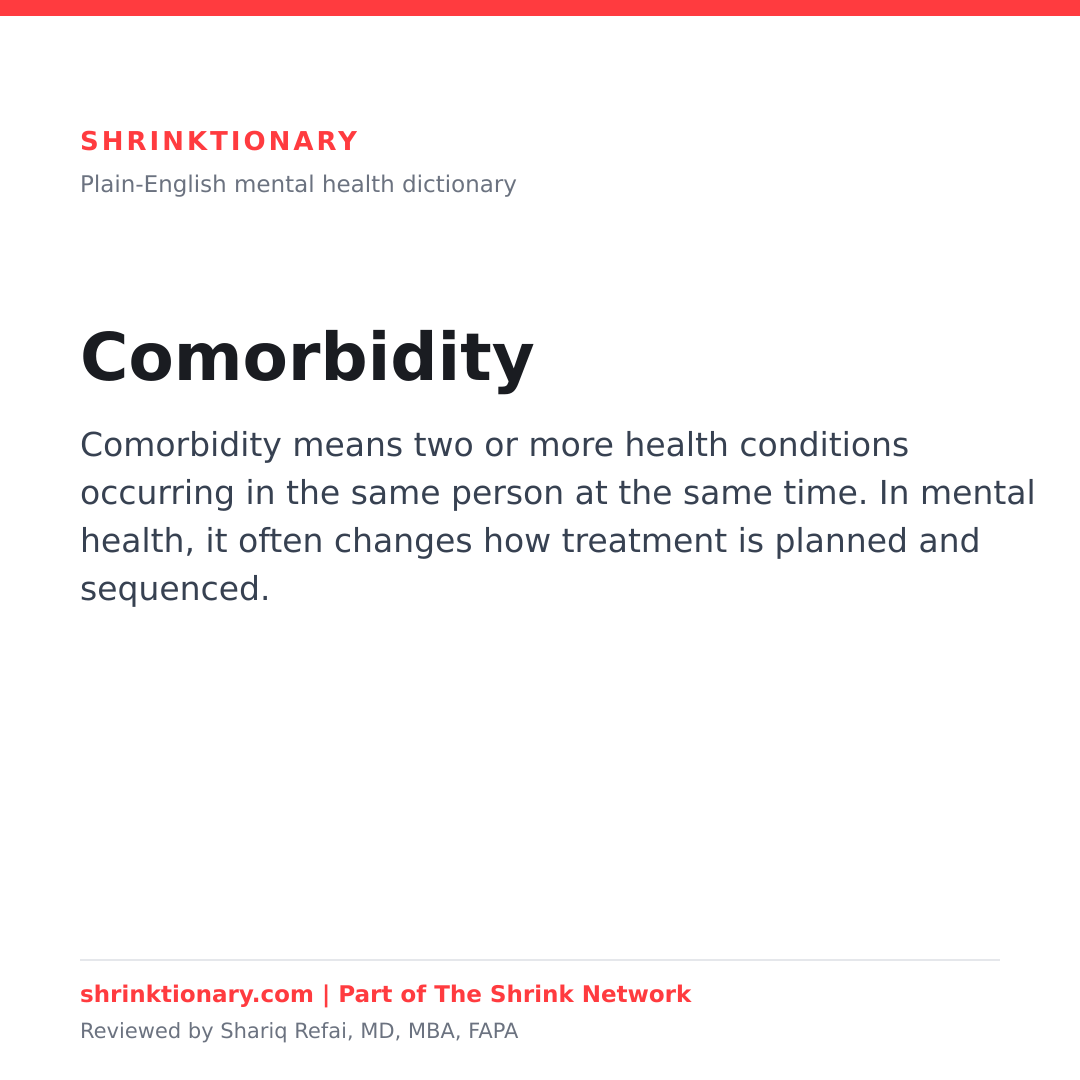
Comorbidity describes the situation where a person has more than one condition at the same time. The conditions can be two mental health diagnoses, like depression and an anxiety disorder, or a mental health condition paired with a physical one, like depression and heart disease.
In psychiatry, comorbidity is common rather than rare. Many people who meet criteria for one disorder also meet criteria for another. The conditions may share risk factors, one may raise the risk of the other, or they may simply overlap because their symptoms run together.
What comorbidity looks like in practice
When two conditions occur together, they often shape each other. Untreated anxiety can deepen depression. Chronic pain can worsen mood. A substance use problem can mask or magnify an underlying mental health condition. Because of this, clinicians try to see the whole picture instead of treating each piece in isolation.
Comorbidity changes treatment in concrete ways. It can affect which medication is chosen, since one drug might help two problems or worsen another. It can change the order of care, since the most disabling or dangerous condition is often addressed first. It can also lengthen recovery, because two conditions usually take more time and coordination to treat than one.
What comorbidity isn’t
Comorbidity isn’t the same as a single condition with many symptoms. A person with depression can have low energy, poor sleep, and trouble concentrating without having a second disorder. Those are features of one diagnosis, not two.
It also isn’t a judgment about severity by itself. Having comorbid conditions doesn’t automatically mean a person is sicker, but it does mean care needs to account for more than one moving part.
Related terms you’ll see next
Differential diagnosis is the process clinicians use to sort out which conditions are present. Depression and anxiety are among the most commonly co-occurring conditions. ADHD frequently appears alongside other diagnoses.
When to seek professional care
If you suspect more than one condition is affecting your life, a full evaluation matters. A clinician can sort out what’s going on, decide what to treat first, and build a plan that accounts for how the conditions interact. Treating only part of the picture often leaves the rest unaddressed, so an accurate, complete assessment is worth seeking.
When this word matters
It matters when two or more conditions occur in the same person at once, since that often changes how treatment is planned, sequenced, and prioritized. In mental health, comorbidity is common, like depression alongside anxiety or a substance use disorder.
Commonly confused with
Frequently asked questions
Is comorbidity common in mental health?
Yes, it's common rather than rare. Many people who meet criteria for one disorder also meet criteria for another, since conditions may share risk factors or overlap in their symptoms.
How does comorbidity affect treatment?
It can affect which medication is chosen, change the order of care so the most disabling condition is addressed first, and lengthen recovery. Clinicians try to see the whole picture instead of treating each piece in isolation.
Does having comorbid conditions mean I'm sicker?
Not by itself. Comorbidity isn't an automatic judgment about severity, but it does mean care needs to account for more than one moving part.
Related terms
Compare
Sources
- Substance Use and Co-Occurring Mental Disorders , National Institute of Mental Health
- Mental Disorders , MedlinePlus
Use or cite this definition
Free to reuse with attribution. Paste the block into your own page, or grab a citation.
Embed on your site
<blockquote>
<p><strong>Comorbidity:</strong> Comorbidity means two or more health conditions occurring in the same person at the same time. In mental health, it often changes how treatment is planned and sequenced.</p>
<p>— <a href="https://shrinktionary.com/terms/comorbidity/">Shrinktionary</a>, a plain-English mental health dictionary, medically reviewed by a board certified psychiatrist.</p>
</blockquote>Cite (APA)
Refai, S. (2026). Comorbidity. Shrinktionary. https://shrinktionary.com/terms/comorbidity/
Cite (MLA)
"Comorbidity." Shrinktionary, https://shrinktionary.com/terms/comorbidity/. Accessed September 29, 2026.
Your next step in The Shrink Network
You are here: Shrinktionary, the language layer of The Shrink Network.
Each site in the network has one job. No matter where you enter, we help you find the next step that makes sense.
Want to understand more first?
See how this connects to everything else in the Term Web →
Take it with you
Free printable references you can save or share. For education, not medical advice.