What postpartum depression actually is
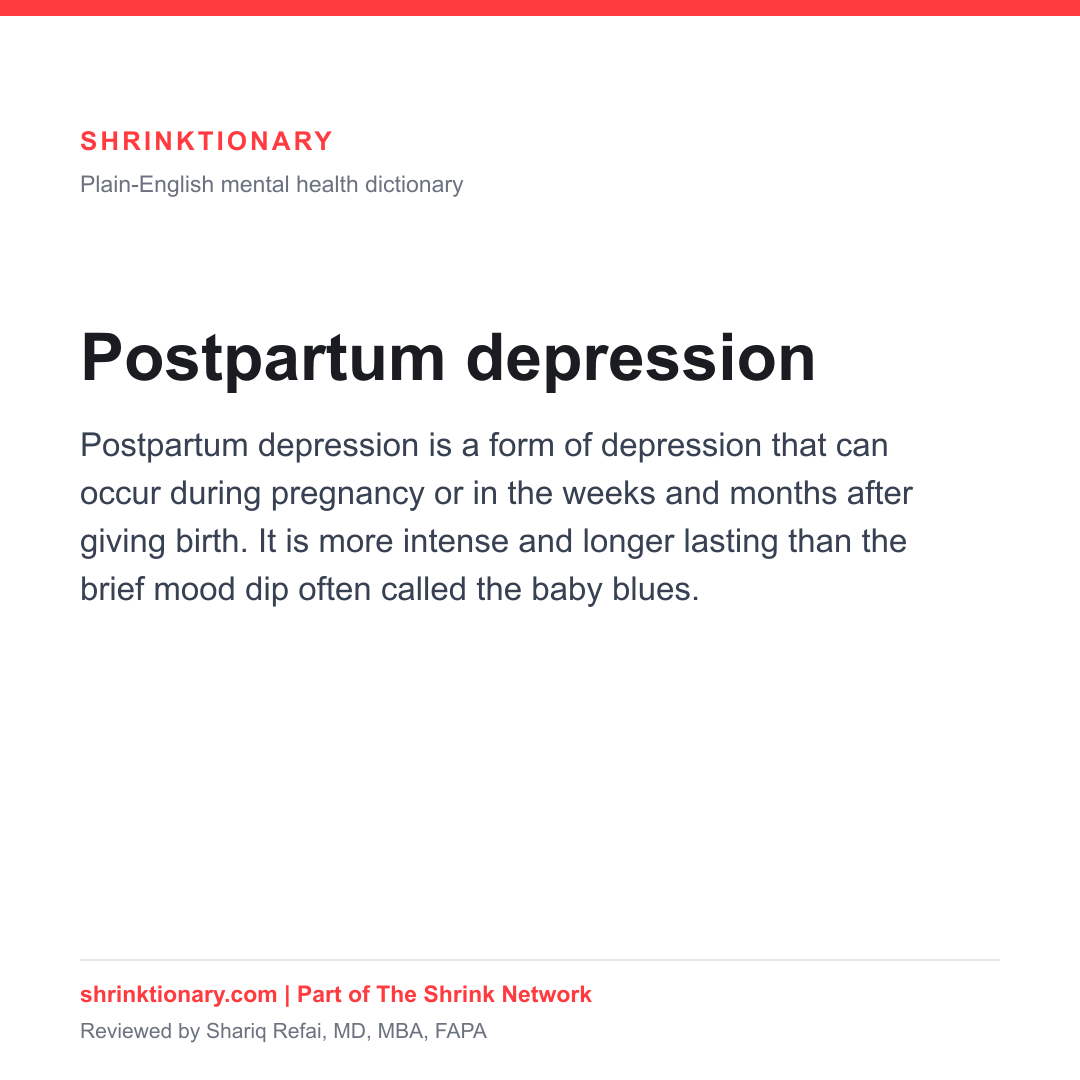
Postpartum depression is depression that occurs during pregnancy or after childbirth. Clinicians often use the broader term perinatal depression to capture both the pregnancy period and the time after birth. It involves the core features of depression, including persistent low mood, loss of interest, fatigue, changes in sleep and appetite, and difficulty concentrating.
Beyond the general symptoms, postpartum depression can include intense worry about the baby, feeling disconnected from the baby, guilt about not measuring up as a parent, or fears of being unable to cope. These feelings can be frightening and are often kept hidden out of shame, even though they are a recognized part of the condition.
Hormonal shifts, sleep loss, and the major life change of caring for a newborn all contribute. It can affect birthing parents and, in different ways, partners as well. Importantly, it’s a medical condition, not a reflection of how much someone loves their child.
What postpartum depression can feel like
Many people describe expecting joy and instead feeling numb, overwhelmed, or tearful much of the time. There can be a heavy sense of failing at something that was supposed to come naturally, along with exhaustion that sleep does not seem to fix.
Some feel anxious and on edge, checking on the baby constantly or unable to rest even when they have the chance. Others feel emotionally flat or distant from the baby, which can be deeply distressing and add to the guilt. These experiences can make reaching out feel hard, even though help is available and effective.
What postpartum depression isn’t
Postpartum depression isn’t the same as the baby blues, the brief period of tearfulness and mood swings that many new parents have in the first days or two weeks after birth. The baby blues fade on their own, while postpartum depression is more intense, lasts longer, and interferes with daily functioning.
It also isn’t a sign of being a bad parent or not loving the baby. It’s a treatable medical condition with biological and situational roots, and recovering from it helps both the parent and the child.
Related terms you’ll see next
Depression is the broader condition this belongs to. Major depressive disorder is the diagnosis it often falls under. Anxiety frequently occurs alongside postpartum depression. Insomnia and disrupted sleep are common features.
When to seek professional care
If low mood, anxiety, or feeling disconnected lasts beyond the first couple of weeks after birth, or shows up during pregnancy, an evaluation is worthwhile. A clinician can sort out what’s going on and discuss treatments that are safe and effective during this period. Reaching out early helps both parent and baby. If you have thoughts of harming yourself or the baby, seek help right away. If you’re in crisis, call or text 988 in the United States.
When evaluation may help
Not everyone reading about postpartum depression needs treatment. If it's getting in the way of your day, your sleep, your work, or your relationships, or if it isn't easing on its own, a professional evaluation is a reasonable next step. Most people start with their primary care doctor or a therapist. A psychiatrist is the right call when medication may be involved or the picture is complicated, though waits can be long.
We keep an honest, no-commission rundown of the options, from primary care to telepsychiatry to crisis lines, on one page.
If you're in crisis or thinking about suicide, call or text 988 in the US, or go to the nearest emergency room.
When this word matters
It crosses from the brief baby blues into clinically meaningful territory when low mood, anxiety, or feeling disconnected from the baby lasts beyond the first couple of weeks or shows up during pregnancy and starts interfering with daily life. It's the diagnosis to take seriously around childbirth, and it often overlaps with major depression and anxiety.
Commonly confused with
Frequently asked questions
What's the difference between postpartum depression and the baby blues?
The baby blues are a brief period of tearfulness and mood swings that many new parents have in the first days or two weeks after birth, and they fade on their own. Postpartum depression is more intense, lasts longer, and interferes with daily functioning.
Does having postpartum depression mean I'm a bad parent?
No. Postpartum depression isn't a sign of being a bad parent or not loving the baby. It's a treatable medical condition with biological and situational roots, and recovering from it helps both the parent and the child.
When should I get help for postpartum depression?
If low mood, anxiety, or feeling disconnected lasts beyond the first couple of weeks after birth, or shows up during pregnancy, an evaluation is worthwhile. Reaching out early helps both parent and baby, and if you have thoughts of harming yourself or the baby, seek help right away or call or text 988 in the United States.
Related terms
In these language clusters
Sources
- Perinatal Depression , National Institute of Mental Health
- Postpartum Depression , MedlinePlus
- Diagnostic and Statistical Manual of Mental Disorders, Fifth Edition, Text Revision (DSM-5-TR) , American Psychiatric Association
Use or cite this definition
Free to reuse with attribution. Paste the block into your own page, or grab a citation.
Embed on your site
<blockquote>
<p><strong>Postpartum depression:</strong> Postpartum depression is a form of depression that can occur during pregnancy or in the weeks and months after giving birth. It is more intense and longer lasting than the brief mood dip often called the baby blues.</p>
<p>— <a href="https://shrinktionary.com/terms/postpartum-depression/">Shrinktionary</a>, a plain-English mental health dictionary, medically reviewed by a board certified psychiatrist.</p>
</blockquote>Cite (APA)
Refai, S. (2026). Postpartum depression. Shrinktionary. https://shrinktionary.com/terms/postpartum-depression/
Cite (MLA)
"Postpartum depression." Shrinktionary, https://shrinktionary.com/terms/postpartum-depression/. Accessed September 29, 2026.
Your next step in The Shrink Network
You are here: Shrinktionary, the language layer of The Shrink Network.
Each site in the network has one job. No matter where you enter, we help you find the next step that makes sense.
Want to understand more first?
See how this connects to everything else in the Term Web →
Take it with you
Free printable references you can save or share. For education, not medical advice.